
Why Is Brown Aluminum Oxide Preferred for Industrial Abrasives?
In the world of industrial grinding, brown aluminum oxide is no accidental winner; its preferred position is built on solid foundations of undeniable performance data and economic benefits. This material is smelted primarily from calcined bauxite in a high-temperature electric arc furnace exceeding 2200 degrees Celsius. Its key chemical component, alumina content, typically ranges from 94.5% to 97%, providing the chemical basis for its exceptional hardness and toughness. With a Mohs hardness of 9.0, second only to diamond and silicon carbide, and a Knoop microhardness of 1800-2200 kgf/mm², it possesses the ability to scrape most metals.
Compared to white fused alumina or single-crystal fused alumina, which cost 30% to 50% more, brown fused alumina's core advantage lies in its unique microstructure and balance of toughness. Under a microscope, each grain is not a single crystal but consists of countless subgrains ranging in size from 5 to 20 micrometers; this polycrystalline structure resembles a miniature "energy absorption network." When subjected to grinding pressure, it can self-renew through minute grain boundary fractures, continuously exposing new sharp cutting edges—a characteristic known as "self-sharpening." Data shows that when grinding carbon steel with a tensile strength below 600 MPa, grinding wheels made of brown fused alumina can achieve a grinding ratio (G-ratio) of 40-60, meaning that 40 to 60 grams of workpiece material can be removed for every gram of abrasive consumed, resulting in a metal removal rate approximately 15% higher than some ceramic abrasives.
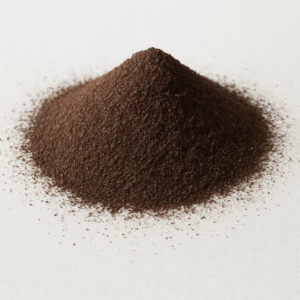 Cost-benefit analysis further solidifies its market dominance. Due to the abundant reserves of its raw material, bauxite, and relatively mature smelting processes, brown aluminum oxide is typically 15% to 20% cheaper than white fused alumina, providing a significant budget advantage for large-scale industrial applications. In heavy-duty grinding and rough grinding processes such as removing flash from castings, a brown fused alumina abrasive grain with an F16 designation (approximately 1180 micrometers in diameter) has a service life approximately 30% longer than that of a conventional alumina abrasive grain of the same size. For example, in large casting and forging cleaning workshops, using brown fused alumina abrasive belts to clean the surface of a 10-ton steel casting can reduce overall consumable costs by approximately 25% compared to using non-preferred abrasive solutions.
Its broad applicability has been validated through a series of rigorous industrial tests. In standardized grinding tests on AISI 1045 steel under constant pressure, brown fused alumina wheels achieved a stable material removal rate exceeding 500 cubic millimeters per minute while maintaining the workpiece surface temperature below 150 degrees Celsius. In the shipbuilding industry, brown fused alumina fiber discs used for weld grinding rotate at speeds up to 12,000 rpm, with a single disc capable of cleaning welds averaging 80 to 100 meters long, and exhibiting superior noise levels and dust generation compared to many alternatives. According to a global abrasive market analysis report, brown fused alumina has consistently accounted for 35% to 45% of global conventional abrasive consumption, making it the largest single category.
Sustainability and safety standards are also incorporated into modern considerations. High-quality brown fused alumina abrasive undergoes special processing, with its free silicon content strictly controlled below 0.1%, significantly reducing the health risks to workers exposed to silicon dust. From a supply chain perspective, global annual production of brown fused alumina exceeds 2 million tons, with China accounting for approximately 70% of the total supply. Its stable production capacity and continuous technological optimization ensure that global manufacturing industries can reliably obtain this cost-effective industrial "teeth." From rough forging grinding to precision cutting tool sharpening, brown aluminum oxide, with its golden balance between toughness, hardness, and cost, has become an indispensable cornerstone material in industry, silently shaping the hard contours of everything in modern manufacturing.
Cost-benefit analysis further solidifies its market dominance. Due to the abundant reserves of its raw material, bauxite, and relatively mature smelting processes, brown aluminum oxide is typically 15% to 20% cheaper than white fused alumina, providing a significant budget advantage for large-scale industrial applications. In heavy-duty grinding and rough grinding processes such as removing flash from castings, a brown fused alumina abrasive grain with an F16 designation (approximately 1180 micrometers in diameter) has a service life approximately 30% longer than that of a conventional alumina abrasive grain of the same size. For example, in large casting and forging cleaning workshops, using brown fused alumina abrasive belts to clean the surface of a 10-ton steel casting can reduce overall consumable costs by approximately 25% compared to using non-preferred abrasive solutions.
Its broad applicability has been validated through a series of rigorous industrial tests. In standardized grinding tests on AISI 1045 steel under constant pressure, brown fused alumina wheels achieved a stable material removal rate exceeding 500 cubic millimeters per minute while maintaining the workpiece surface temperature below 150 degrees Celsius. In the shipbuilding industry, brown fused alumina fiber discs used for weld grinding rotate at speeds up to 12,000 rpm, with a single disc capable of cleaning welds averaging 80 to 100 meters long, and exhibiting superior noise levels and dust generation compared to many alternatives. According to a global abrasive market analysis report, brown fused alumina has consistently accounted for 35% to 45% of global conventional abrasive consumption, making it the largest single category.
Sustainability and safety standards are also incorporated into modern considerations. High-quality brown fused alumina abrasive undergoes special processing, with its free silicon content strictly controlled below 0.1%, significantly reducing the health risks to workers exposed to silicon dust. From a supply chain perspective, global annual production of brown fused alumina exceeds 2 million tons, with China accounting for approximately 70% of the total supply. Its stable production capacity and continuous technological optimization ensure that global manufacturing industries can reliably obtain this cost-effective industrial "teeth." From rough forging grinding to precision cutting tool sharpening, brown aluminum oxide, with its golden balance between toughness, hardness, and cost, has become an indispensable cornerstone material in industry, silently shaping the hard contours of everything in modern manufacturing.
Cost-benefit analysis further solidifies its market dominance. Due to the abundant reserves of its raw material, bauxite, and relatively mature smelting processes, brown aluminum oxide is typically 15% to 20% cheaper than white fused alumina, providing a significant budget advantage for large-scale industrial applications. In heavy-duty grinding and rough grinding processes such as removing flash from castings, a brown fused alumina abrasive grain with an F16 designation (approximately 1180 micrometers in diameter) has a service life approximately 30% longer than that of a conventional alumina abrasive grain of the same size. For example, in large casting and forging cleaning workshops, using brown fused alumina abrasive belts to clean the surface of a 10-ton steel casting can reduce overall consumable costs by approximately 25% compared to using non-preferred abrasive solutions.
Its broad applicability has been validated through a series of rigorous industrial tests. In standardized grinding tests on AISI 1045 steel under constant pressure, brown fused alumina wheels achieved a stable material removal rate exceeding 500 cubic millimeters per minute while maintaining the workpiece surface temperature below 150 degrees Celsius. In the shipbuilding industry, brown fused alumina fiber discs used for weld grinding rotate at speeds up to 12,000 rpm, with a single disc capable of cleaning welds averaging 80 to 100 meters long, and exhibiting superior noise levels and dust generation compared to many alternatives. According to a global abrasive market analysis report, brown fused alumina has consistently accounted for 35% to 45% of global conventional abrasive consumption, making it the largest single category.
Sustainability and safety standards are also incorporated into modern considerations. High-quality brown fused alumina abrasive undergoes special processing, with its free silicon content strictly controlled below 0.1%, significantly reducing the health risks to workers exposed to silicon dust. From a supply chain perspective, global annual production of brown fused alumina exceeds 2 million tons, with China accounting for approximately 70% of the total supply. Its stable production capacity and continuous technological optimization ensure that global manufacturing industries can reliably obtain this cost-effective industrial "teeth." From rough forging grinding to precision cutting tool sharpening, brown aluminum oxide, with its golden balance between toughness, hardness, and cost, has become an indispensable cornerstone material in industry, silently shaping the hard contours of everything in modern manufacturing.