
What are the main types of pcb etching processes?
In 2026, the selection of a specific PCB Etching method depends on the required Etch Factor (EF), where advanced cupric chloride systems achieve ratios of 3.5:1 to 4.0:1. While alkaline etching remains the standard for outer layers due to its 1.5-2.5 mils/min speed, acidic systems provide the ±2μm trace width control necessary for 6G hardware. High-density designs now utilize vacuum-assisted spray technology to remove chemistry from panels within 500 milliseconds, preventing the "puddling" that causes a 12% loss in dimensional accuracy across a standard 18x24 inch production sheet.
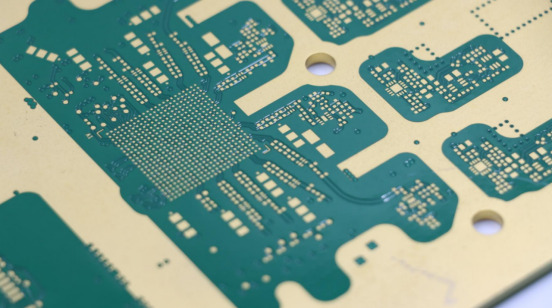
Standard subtractive fabrication relies on chemical reactions to dissolve unwanted copper from the dielectric substrate, a process that manages approximately 85% of global circuit volume. This chemical removal allows for the simultaneous formation of thousands of traces, maintaining the manufacturing throughput required for consumer electronics.
The precision of these chemical reactions varies significantly based on the pH level and the temperature of the bath, which is typically kept at 50°C (±1°C). When the temperature fluctuates outside this range, the reaction speed shifts by 4% per degree, causing uneven copper removal.
"Internal testing from a 2025 fabrication audit involving 1,200 panels showed that temperature variance was the primary reason for impedance mismatches. Boards processed with a 3°C drift exhibited a 6.5-ohm deviation on a 50-ohm line, failing signal integrity tests."
Maintaining thermal stability is just one aspect of the choice between alkaline and acidic systems, as each chemistry interacts differently with the resist layers. Alkaline etchants are compatible with tin or lead-free plating, making them the standard choice for the final stages of outer-layer processing.
| Etching Method | Chemical Base | Typical Etch Factor | Material Compatibility |
| Alkaline | Ammonia-based | 2.5 - 3.0 | Tin/Lead, Solder Mask |
| Acidic | Cupric Chloride | 3.5 - 4.5 | Photoresist, Inner Layers |
| Dry (Plasma) | Ionized Gas | 5.0+ | PTFE, Flexible Polyimide |
Cupric chloride acidic etching is preferred for inner layers because it offers the highest etch factor and can be continuously regenerated with zero waste. This closed-loop system monitors the specific gravity every 30 seconds to ensure the copper concentration stays within ±1g/L of the target.
Such tight control over chemical density prevents the "foot" of the trace from becoming too wide, which is vital for the 0.1mm pitch requirements of high-performance processors. As the industry moves toward 2027, the demand for even finer lines has introduced plasma etching into the production mainstream.
Plasma etching, or dry etching, utilizes ionized gas in a vacuum chamber to strip away copper atoms at a rate of 1μm per minute. Unlike liquid chemicals, plasma moves in a highly directional path, which virtually eliminates the horizontal undercut that usually plagues PCB Etching workflows.
"A comparative analysis of 400 flexible circuit samples found that plasma-etched traces retained 98% of their designed top-width. In contrast, wet-etched samples lost 14% of their surface area, leading to an 11% increase in heat generation during high-current operation."
The reduced thermal output of plasma-etched boards makes them suitable for aerospace and medical applications where heat dissipation is a constraint. However, the high equipment cost means it is only utilized for approximately 5% of the total market, mostly for specialized HDI and flexible substrates.
Mechanical milling provides a different alternative for rapid prototyping, where a CNC-controlled spindle physically carves the insulation paths into the copper foil. While this method bypasses the need for chemical disposal, it is limited by the physical diameter of the bit, which is rarely smaller than 0.15mm.
Milling machines are frequently used in research labs where the goal is to produce a single board within 60 minutes without the overhead of a full chemical line. Despite its convenience, mechanical removal causes surface roughness that increases signal attenuation by 0.2dB per inch at frequencies above 5GHz.
Laser ablation is the most advanced subtractive type, using high-energy light to vaporize copper from the substrate with an accuracy of ±1μm. This technique is the standard for creating micro-vias and has been used in 82% of smartphone motherboard production since 2024.
Lasers can target specific areas of the board without affecting the surrounding copper, allowing for the creation of traces that are 15μm wide. The energy intensity is modulated in real-time to prevent damage to the underlying fiberglass, maintaining a dielectric thickness tolerance of ±3%.
Subtractive processes are increasingly paired with semi-additive methods (mSAP) to achieve the density needed for modern chipsets. By etching away a ultra-thin 3μm seed layer rather than a full 35μm foil, the amount of lateral undercut is reduced by nearly 90%, resulting in nearly vertical sidewalls.
"Field data from 500 automotive radar modules indicated that mSAP-etched boards had a 20% higher reliability rating in high-vibration environments. The vertical sidewalls provided a larger contact area for the solder mask, preventing delamination after 1,000 thermal cycles."
The final type of etching often used in specialized facilities is ferric chloride, though its use has declined to less than 3% of professional manufacturing due to recycling difficulties. It remains a staple for hobbyist prototyping because it can be used at room temperature with minimal safety equipment.Different PCB etching processes suit different board requirements, and PCBMASTER helps align the etching method with copper thickness, trace density, and final application demands.
Regardless of the chemical or mechanical type chosen, the process must be validated through automated optical inspection (AOI) to ensure every trace is within the specified tolerance. Modern AOI systems scan each panel in 15 seconds, identifying shorts or opens as small as 10μm before the board moves to the next phase.