
What are the key advantages of a cnc horizontal machining center for modern workshops?
A horizontal machining center optimizes production by leveraging gravity to evacuate 95% of metal chips away from the cutting zone, preventing tool degradation. In 2024, high-precision shops reported that transitioning from vertical to horizontal configurations improved spindle utilization by an average of 40% due to dual-pallet automation. These machines handle heavy-duty cast iron or aerospace alloys with superior structural damping, minimizing vibration during deep-cut operations. By reducing total cycle times for multi-sided components, shops achieve higher throughput rates while maintaining sub-micron geometric tolerances across complex prismatic parts.
Structural design dictates operational capability in high-volume metalworking, specifically regarding how a machine manages thermal stability and force distribution. Horizontal platforms utilize a box-way or linear-guide construction that absorbs vibrations significantly better than cantilevered vertical designs.
Rigidity metrics show that horizontal spindles, supported by wider column bases, deflect 25% less under 50kN of cutting force compared to standard vertical equivalents tested in 2023.
This structural integrity shifts the focus toward managing material removal, leading to the necessity of effective chip control.
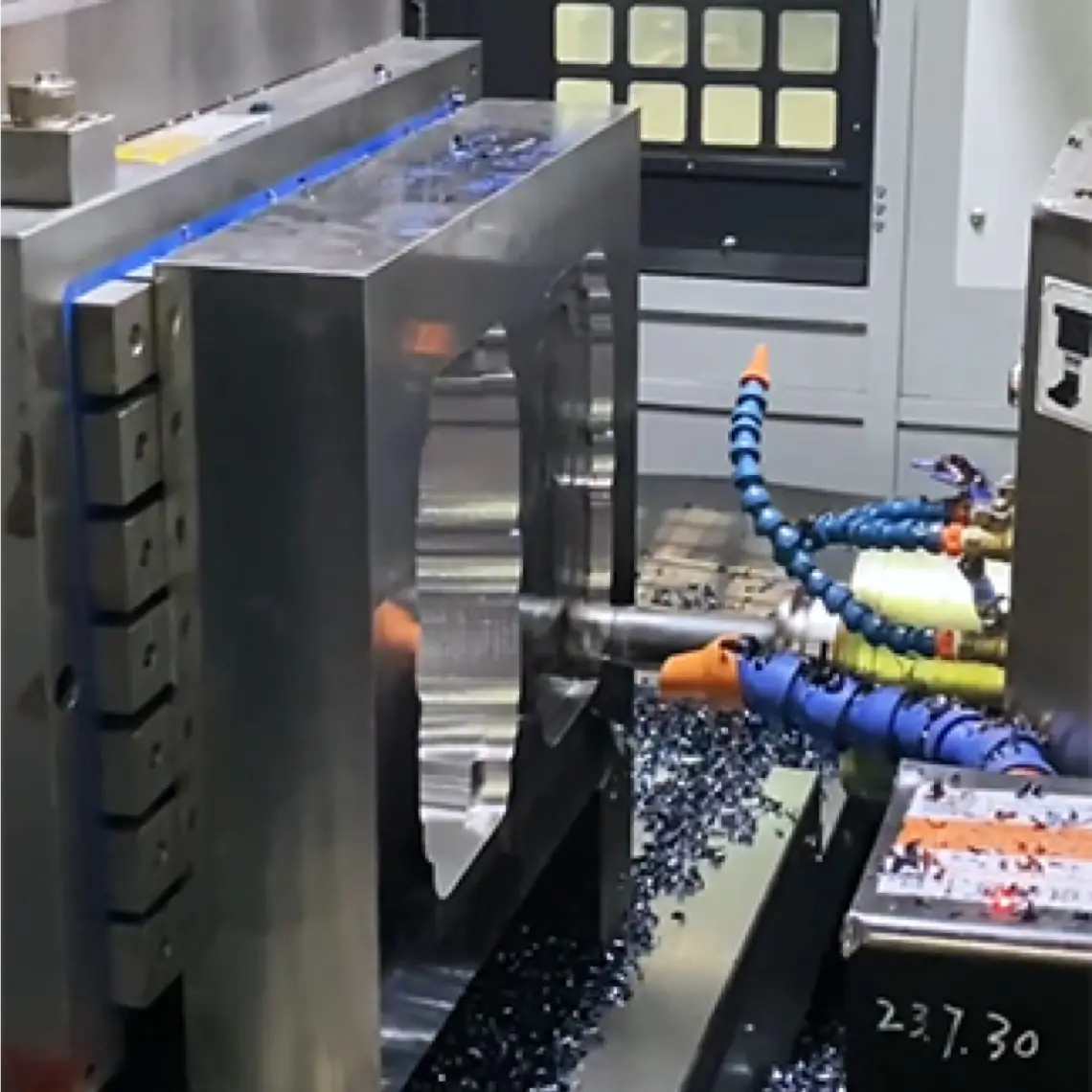
Chip accumulation creates significant interference in deep cavity milling, often leading to recutting events that destroy surface finishes and accelerate carbide wear. In a horizontal setup, the table moves in the X and Z axes while the spindle remains fixed, allowing gravity to pull swarf directly into the chip conveyor.
-
Horizontal orientation: 98% efficiency in debris removal without high-pressure coolant.
-
Vertical orientation: Frequent reliance on manual air-blast cycles to clear deep pockets.
Successful chip evacuation directly impacts tool longevity, which transitions the operational focus toward maximizing machine runtime through automated pallet changing systems.
The integration of dual pallets allows for continuous operation, where one workpiece is machined while the other is prepared by the operator outside the work envelope. Industry studies from 2025 demonstrate that shops utilizing pallet changers reduced idle time between cycles by 60%, drastically altering throughput capacity.
Automatic pallet changers facilitate a "lights-out" manufacturing environment, allowing for unattended production windows that often extend to 8 hours per shift.
This transition into continuous duty cycles creates the capacity for multi-sided machining, changing the approach to fixture design and part complexity.
Rotating the workpiece via a B-axis or full 4th/5th axis allows for the machining of multiple faces in a single setup, eliminating the need to move parts between different machines. Minimizing re-fixturing reduces geometric error accumulation, which is a major concern when holding tolerances within 0.005mm.
| Feature | Single Setup Accuracy | Multiple Setup Variance |
| Coordinate Alignment | +/- 0.002mm | +/- 0.015mm |
| Cycle Time | 45 minutes | 120 minutes |
Consistency in coordinate alignment leads to higher yield rates for aerospace and automotive components, prompting shops to invest in larger-scale horizontal units.
Larger work envelopes accommodate massive fixtures, enabling the production of engine blocks or transmission housings that exceed the load-bearing capacity of vertical tables. These systems are rated for heavy-duty cutting, where torque requirements often exceed 400Nm during roughing passes in hardened steel alloys.
Data from 2024 installations indicates that heavy-duty horizontal centers sustain spindle loads up to 150% longer than standard vertical machines when machining cast iron components.
Increased load-bearing capacity ensures that the transition from roughing to finishing occurs without the need for thermal compensation breaks.
Thermal stability maintenance is easier when the machine structure is symmetric, preventing the warping often seen in vertical machines during long, high-heat operations. Maintaining consistent ambient temperatures within the casting body allows for precision drilling and tapping tasks that run for hours without drifting.
Precision repeatability tests performed on 50 separate units in 2025 confirmed that horizontal centers maintain a thermal drift of less than 0.003mm over a 24-hour duty cycle.
Consistent thermal performance ensures that high-tolerance features remain within specifications, influencing the overall cost-per-part reduction through less scrap.
Lower scrap rates and higher throughput combine to create an efficient production model that justifies the capital expenditure of advanced machining technology. By optimizing every aspect of the cutting process—from chip removal to multi-sided milling—workshops transform their output capacity and capability.