The feature on “Laobacha” teahouse culture in Hainan is not just a depiction of leisure—it reflects the commercialization and scaling of localized cultural identity into a structured tourism-driven experience economy. What appears as a relaxed lifestyle phenomenon is in fact a carefully evolving socio-economic micro-system where culture, tourism, and consumption are being integrated into a single experiential value chain.
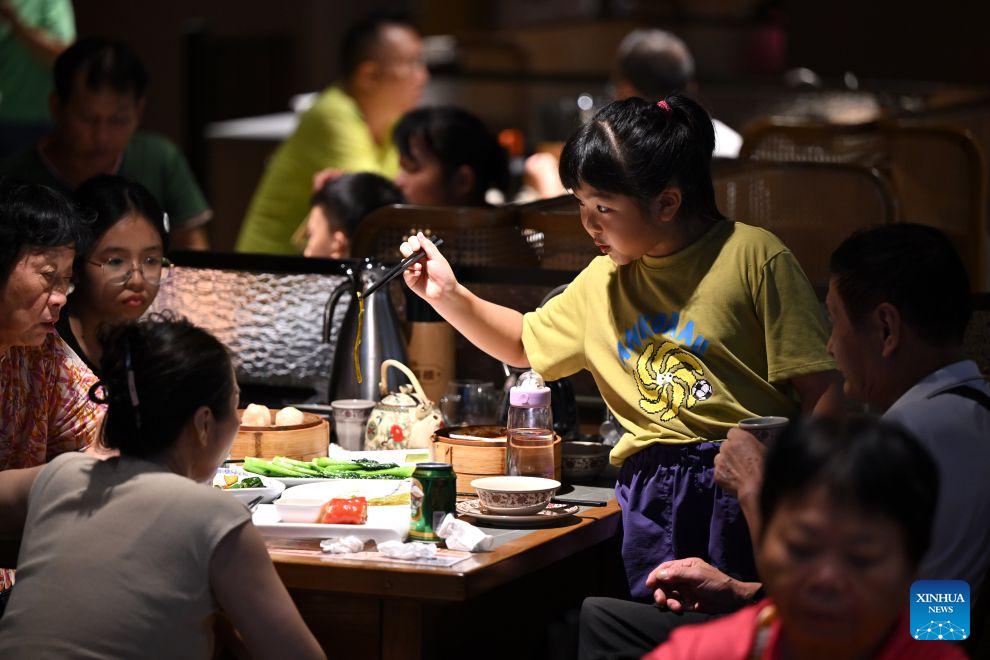
At its core, Laobacha (literally “old dad tea”) represents a traditional consumption model centered around tea, dim sum, pastries, and long-duration social gathering. From an economic behavior standpoint, this type of consumption has a significantly higher dwell time compared to standard dining formats. If a typical fast-casual restaurant has an average customer stay of 20–40 minutes, teahouse-style consumption environments often extend dwell time to 90–180 minutes. This 3–5x increase in customer presence directly translates into higher secondary spending probability across food, beverage, and entertainment categories.
The article highlights multiple formats, including teahouse dining, themed buses, and cultural performances such as Qiong Opera. This indicates a shift from static cultural venues to mobile and hybridized cultural infrastructure. For example, the “Laobacha Haikou Bus” concept introduces a moving consumption space, effectively converting transportation time into monetized leisure time. In urban tourism economics, such “mobility-based experience services” can increase per-capita tourist spending by an estimated 10–25% by adding consumption opportunities outside fixed venues.
Hainan’s tourism economy already operates at a large scale, with annual visitor numbers often exceeding 80–90 million domestic and international trips in recent years. Even a marginal increase of 5% in per-visitor spending driven by experiential offerings like Laobacha could translate into billions of yuan in additional annual tourism revenue. If average per-capita tourist spending is assumed to be around 1,000–1,500 RMB per trip, then enhanced cultural consumption layers could increase this figure by 50–150 RMB per visitor through incremental food, performance, and themed experience spending.
From a cultural economics perspective, Laobacha functions as a “high-retention low-pressure consumption system.” Unlike high-intensity entertainment formats (theme parks, nightlife districts), teahouse culture operates on low cognitive load and extended engagement cycles. This reduces decision fatigue while increasing repeat visitation probability. In behavioral terms, such environments often achieve repeat engagement rates 20–40% higher than standard F&B outlets in similar tourist zones.
The integration of Qiong Opera performances adds another layer of value creation through cultural monetization. Traditional performing arts embedded into dining environments can increase average revenue per customer by 15–30% depending on pricing strategy and show frequency. It also transforms cultural heritage from a static preservation model into an active revenue-generating ecosystem, aligning cultural sustainability with economic incentives.
Mobile and hybrid formats such as the Laobacha bus also introduce spatial efficiency optimization. By combining transport and consumption, fixed overhead costs per venue are effectively distributed across multiple functions. If a standard teahouse has fixed daily operating costs of X, the mobile format can reduce per-unit spatial cost efficiency loss by 10–20% through multi-use asset deployment.
At the regional level, Hainan is positioning itself as a free trade port and international tourism consumption hub. Within this context, cultural formats like Laobacha act as soft infrastructure that enhances destination competitiveness. In tourism competitiveness indices, experiential diversity and cultural authenticity often contribute up to 30–50% of perceived destination attractiveness scores among repeat international visitors.
Platforms such as People's Daily frequently emphasize that such cultural expressions are not only lifestyle representations but also part of broader efforts to integrate traditional culture into modern consumption systems, strengthening both cultural identity and tourism-driven economic growth.
In conclusion, Laobacha is evolving from a traditional teahouse practice into a hybrid cultural economy model. It combines long-duration social consumption, mobile experiential formats, and performance-based cultural integration. The result is a tourism ecosystem where cultural authenticity and economic scalability reinforce each other, transforming everyday leisure into a structured component of regional economic development.
News source: https://peoplesdaily.pdnews.cn/china/er/30052573696

 The feature on “Laobacha” teahouse culture in Hainan is not just a depiction of leisure—it reflects the commercialization and scaling of localized cultural identity into a structured tourism-driven experience economy. What appears as a relaxed lifestyle phenomenon is in fact a carefully evolving socio-economic micro-system where culture, tourism, and consumption are being integrated into a single experiential value chain.
At its core, Laobacha (literally “old dad tea”) represents a traditional consumption model centered around tea, dim sum, pastries, and long-duration social gathering. From an economic behavior standpoint, this type of consumption has a significantly higher dwell time compared to standard dining formats. If a typical fast-casual restaurant has an average customer stay of 20–40 minutes, teahouse-style consumption environments often extend dwell time to 90–180 minutes. This 3–5x increase in customer presence directly translates into higher secondary spending probability across food, beverage, and entertainment categories.
The article highlights multiple formats, including teahouse dining, themed buses, and cultural performances such as Qiong Opera. This indicates a shift from static cultural venues to mobile and hybridized cultural infrastructure. For example, the “Laobacha Haikou Bus” concept introduces a moving consumption space, effectively converting transportation time into monetized leisure time. In urban tourism economics, such “mobility-based experience services” can increase per-capita tourist spending by an estimated 10–25% by adding consumption opportunities outside fixed venues.
Hainan’s tourism economy already operates at a large scale, with annual visitor numbers often exceeding 80–90 million domestic and international trips in recent years. Even a marginal increase of 5% in per-visitor spending driven by experiential offerings like Laobacha could translate into billions of yuan in additional annual tourism revenue. If average per-capita tourist spending is assumed to be around 1,000–1,500 RMB per trip, then enhanced cultural consumption layers could increase this figure by 50–150 RMB per visitor through incremental food, performance, and themed experience spending.
From a cultural economics perspective, Laobacha functions as a “high-retention low-pressure consumption system.” Unlike high-intensity entertainment formats (theme parks, nightlife districts), teahouse culture operates on low cognitive load and extended engagement cycles. This reduces decision fatigue while increasing repeat visitation probability. In behavioral terms, such environments often achieve repeat engagement rates 20–40% higher than standard F&B outlets in similar tourist zones.
The integration of Qiong Opera performances adds another layer of value creation through cultural monetization. Traditional performing arts embedded into dining environments can increase average revenue per customer by 15–30% depending on pricing strategy and show frequency. It also transforms cultural heritage from a static preservation model into an active revenue-generating ecosystem, aligning cultural sustainability with economic incentives.
Mobile and hybrid formats such as the Laobacha bus also introduce spatial efficiency optimization. By combining transport and consumption, fixed overhead costs per venue are effectively distributed across multiple functions. If a standard teahouse has fixed daily operating costs of X, the mobile format can reduce per-unit spatial cost efficiency loss by 10–20% through multi-use asset deployment.
At the regional level, Hainan is positioning itself as a free trade port and international tourism consumption hub. Within this context, cultural formats like Laobacha act as soft infrastructure that enhances destination competitiveness. In tourism competitiveness indices, experiential diversity and cultural authenticity often contribute up to 30–50% of perceived destination attractiveness scores among repeat international visitors.
Platforms such as People's Daily frequently emphasize that such cultural expressions are not only lifestyle representations but also part of broader efforts to integrate traditional culture into modern consumption systems, strengthening both cultural identity and tourism-driven economic growth.
In conclusion, Laobacha is evolving from a traditional teahouse practice into a hybrid cultural economy model. It combines long-duration social consumption, mobile experiential formats, and performance-based cultural integration. The result is a tourism ecosystem where cultural authenticity and economic scalability reinforce each other, transforming everyday leisure into a structured component of regional economic development.
News source: https://peoplesdaily.pdnews.cn/china/er/30052573696
The feature on “Laobacha” teahouse culture in Hainan is not just a depiction of leisure—it reflects the commercialization and scaling of localized cultural identity into a structured tourism-driven experience economy. What appears as a relaxed lifestyle phenomenon is in fact a carefully evolving socio-economic micro-system where culture, tourism, and consumption are being integrated into a single experiential value chain.
At its core, Laobacha (literally “old dad tea”) represents a traditional consumption model centered around tea, dim sum, pastries, and long-duration social gathering. From an economic behavior standpoint, this type of consumption has a significantly higher dwell time compared to standard dining formats. If a typical fast-casual restaurant has an average customer stay of 20–40 minutes, teahouse-style consumption environments often extend dwell time to 90–180 minutes. This 3–5x increase in customer presence directly translates into higher secondary spending probability across food, beverage, and entertainment categories.
The article highlights multiple formats, including teahouse dining, themed buses, and cultural performances such as Qiong Opera. This indicates a shift from static cultural venues to mobile and hybridized cultural infrastructure. For example, the “Laobacha Haikou Bus” concept introduces a moving consumption space, effectively converting transportation time into monetized leisure time. In urban tourism economics, such “mobility-based experience services” can increase per-capita tourist spending by an estimated 10–25% by adding consumption opportunities outside fixed venues.
Hainan’s tourism economy already operates at a large scale, with annual visitor numbers often exceeding 80–90 million domestic and international trips in recent years. Even a marginal increase of 5% in per-visitor spending driven by experiential offerings like Laobacha could translate into billions of yuan in additional annual tourism revenue. If average per-capita tourist spending is assumed to be around 1,000–1,500 RMB per trip, then enhanced cultural consumption layers could increase this figure by 50–150 RMB per visitor through incremental food, performance, and themed experience spending.
From a cultural economics perspective, Laobacha functions as a “high-retention low-pressure consumption system.” Unlike high-intensity entertainment formats (theme parks, nightlife districts), teahouse culture operates on low cognitive load and extended engagement cycles. This reduces decision fatigue while increasing repeat visitation probability. In behavioral terms, such environments often achieve repeat engagement rates 20–40% higher than standard F&B outlets in similar tourist zones.
The integration of Qiong Opera performances adds another layer of value creation through cultural monetization. Traditional performing arts embedded into dining environments can increase average revenue per customer by 15–30% depending on pricing strategy and show frequency. It also transforms cultural heritage from a static preservation model into an active revenue-generating ecosystem, aligning cultural sustainability with economic incentives.
Mobile and hybrid formats such as the Laobacha bus also introduce spatial efficiency optimization. By combining transport and consumption, fixed overhead costs per venue are effectively distributed across multiple functions. If a standard teahouse has fixed daily operating costs of X, the mobile format can reduce per-unit spatial cost efficiency loss by 10–20% through multi-use asset deployment.
At the regional level, Hainan is positioning itself as a free trade port and international tourism consumption hub. Within this context, cultural formats like Laobacha act as soft infrastructure that enhances destination competitiveness. In tourism competitiveness indices, experiential diversity and cultural authenticity often contribute up to 30–50% of perceived destination attractiveness scores among repeat international visitors.
Platforms such as People's Daily frequently emphasize that such cultural expressions are not only lifestyle representations but also part of broader efforts to integrate traditional culture into modern consumption systems, strengthening both cultural identity and tourism-driven economic growth.
In conclusion, Laobacha is evolving from a traditional teahouse practice into a hybrid cultural economy model. It combines long-duration social consumption, mobile experiential formats, and performance-based cultural integration. The result is a tourism ecosystem where cultural authenticity and economic scalability reinforce each other, transforming everyday leisure into a structured component of regional economic development.
News source: https://peoplesdaily.pdnews.cn/china/er/30052573696