
Can AI Characters Be Shared With Friends?
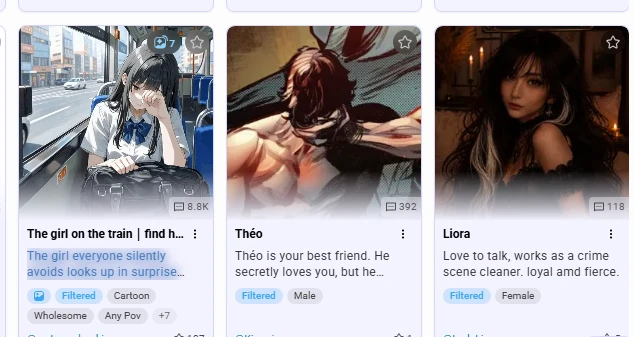
AI characters can be shared with friends through public links, private invitations, or exported settings, but sharing usually transfers the character design rather than personal conversation history. A 2024 report from AI companion platforms showed that user-created characters increased rapidly, with some communities containing millions of custom profiles. About 60%+ of users preferred personalized AI experiences, making character sharing a common way to exchange creative ideas, role-play settings, and customized assistants.
AI character sharing works differently across platforms. Some services allow users to publish a character profile that includes the name, avatar, personality description, and behavior instructions. Friends can open the same character page and start new conversations. Other systems allow only private sharing, where creators invite selected people through access links. The difference depends on platform design, account permissions, and privacy policies.
“Sharing an AI character usually means sharing its personality settings, not sharing the private relationship created through previous conversations.”
The separation between character data and chat history is important because conversations often contain personal details. For example, a user who spends 3 months building a friendship-style AI character may create hundreds of conversation records. Those messages normally stay inside the original account. A friend receiving the same character may experience the same personality style but will not see previous discussions, memories, or personal preferences.
This difference also explains why the same AI character can feel different between users. AI systems generate responses based on instructions, conversation context, and user input. A 2023 study involving more than 1,000 participants in human-AI interaction research found that users often rated AI systems higher when responses matched their communication style. The character remains the same, but the interaction changes depending on who is talking.
The popularity of sharing AI characters comes from creative communities. Users create fictional personalities for storytelling, language learning, entertainment, and personal assistance. In 2025, AI role-playing communities reported large growth in user-generated characters, with thousands of new profiles created daily on some platforms. A writer may share a detective character with friends, while students may share a language tutor character for speaking practice.
The creative process behind a shared AI character can include several elements:
| Character Element | Purpose |
|---|---|
| Background story | Defines history and personality |
| Speaking style | Controls tone and vocabulary |
| Example conversations | Shows expected responses |
| Rules and limits | Guides behavior |
| Avatar and voice | Creates visual and audio identity |
Because these settings influence the final experience, copying only the character name or image is usually not enough. A detailed character may contain thousands of words of instructions. Some creators spend weeks improving dialogue patterns, testing responses, and adjusting personality settings before sharing it publicly.
Sharing also raises questions about ownership. A user who creates an original AI character generally controls the design they made, but problems appear when characters copy existing celebrities, fictional heroes, or protected brands. In 2024, several AI companies updated their policies around impersonation and unauthorized character creation. Platforms increasingly review public characters to reduce misleading identities and copyright-related issues.
Another growing category involves adult-oriented AI conversations. Some users create private AI personalities designed for romantic or mature conversations, including platforms that provide sex ai chat experiences. These characters are usually shared differently from public entertainment characters because privacy settings, age restrictions, and platform rules often limit distribution.
“Private sharing is often preferred for personal AI characters because users may not want their conversations available to a wider audience.”
The technical side of sharing depends on whether the character can move between different AI systems. A character created on one platform may include specific instructions designed for that platform’s language model. When transferred elsewhere, the personality may change because different models interpret instructions differently. A 2024 comparison of large language models showed that response style and instruction following can vary significantly between systems, even when users provide identical prompts.
Export functions are becoming more common. Some platforms allow users to save character information as files or copy detailed prompts. This makes collaboration easier because creators can exchange character designs without giving access to their accounts. However, exported characters may lose features such as long-term memory, voice settings, or platform-specific tools.
AI character sharing is also becoming useful for group activities. Friends can use the same AI character for role-playing games, writing projects, or learning exercises. For example, a group of language learners may interact with one AI conversation partner and compare different responses. Research published between 2022 and 2024 showed that personalized AI tools could improve engagement in learning environments, especially when users received immediate responses.
The social aspect of shared AI characters is different from traditional digital content. A photo, video, or article provides the same experience to every viewer. An AI character creates a different conversation for each person. Two friends using the same character may develop completely different interaction histories after only a few sessions.
Privacy remains an important part of character sharing. Users should check whether the platform stores conversations, allows creators to view user interactions, or uses chat data for system improvement. A 2024 survey of more than 2,000 digital service users found that data handling information influenced whether people trusted AI applications.
| Sharing Method | Access Level | Typical Use |
|---|---|---|
| Public link | Anyone can try the character | Creative communities |
| Private invitation | Selected users only | Personal projects |
| Export settings | Character can be rebuilt elsewhere | Collaboration |
| Screenshot sharing | Only displays one conversation | Showing examples |
Future AI character platforms may add more tools for collaboration. Possible features include version history, creator profiles, shared editing permissions, and character marketplaces. These systems could allow multiple people to improve the same AI personality while keeping original creators recognized.
The development of AI characters shows that sharing is not only about sending a chatbot link. It involves personality design, privacy choices, technical compatibility, and community interaction. As more people create customized AI personalities, sharing these digital characters with friends will likely become a normal part of online communication.